Commercial real estate development looks exciting from the outside. New buildings, rising property values, long-term returns — the industry can feel fast moving and rewarding from a distance.
What most first-time developers discover later is that successful projects don’t hinge on speed or instinct. They hinge on patience, planning, and the ability to manage dozens of moving parts at once.
Before you buy land, the most important thing you can do is understand the full process. One overlooked detail such as a utility approval, a zoning restriction, or a contingency reserve can delay timelines, blow budgets, or stop a project entirely.
Here’s how the development process actually works, and what first-time developers most often wish they’d known before breaking ground.
How Long Does Commercial Real Estate Development Actually Take?
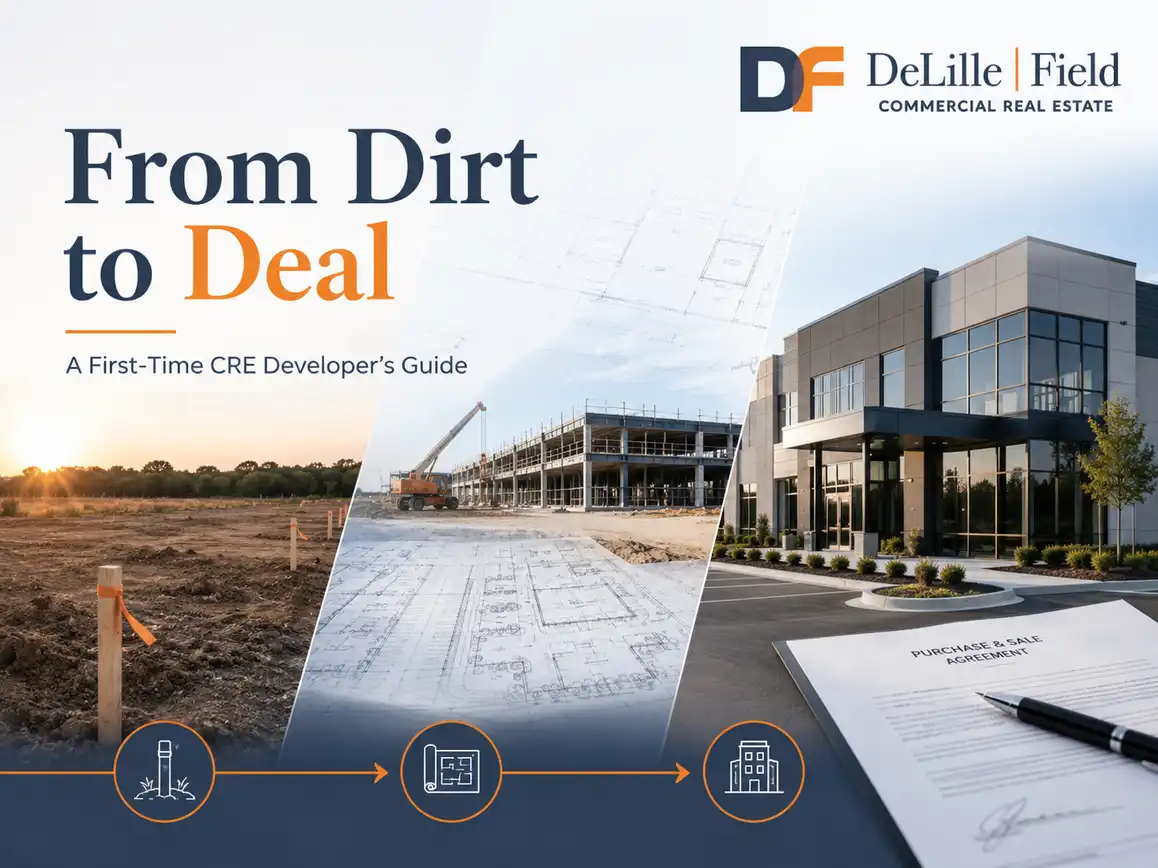
One of the biggest misconceptions in CRE development is how quickly a project comes together. From acquisition to a stabilized property, development is a multi-year process, and almost every phase takes longer than first-time developers expect.
The typical phases and why each one stretches
- Site identification and acquisition. Finding the right parcel, running due diligence, negotiating terms, and closing usually takes several months. Strong opportunities require disciplined evaluation, not speed.
- Zoning and permitting approvals. Municipal reviews, environmental checks, and permit approvals are often the single longest phase of the project. Plan for this taking longer than you’ve been told.
- Design and planning. Architectural plans, engineering studies, and contractor coordination typically go through multiple revisions before construction can begin.
- Timelines vary based on project size, labor availability, weather, and material supply chains. None of those are fully under your control.
- Leasing or sale. Once construction is complete, the project still has to be stabilized through tenant occupancy or disposition — that timeline depends on the market, not the schedule.
Many first-time developers underestimate how delays in one phase cascade into the next. A utility approval that runs a month long pushes financing schedules, contractor availability, and tenant move-ins down the line with it. Building flexibility into both budget and timeline isn’t optional. It’s the work.
What First-Time Developers Need to Know About Zoning, Permitting, and Utilities
Even the right piece of land can become the wrong investment if zoning, permitting, or infrastructure issues are overlooked. Pre-development is where most preventable failures begin.
Zoning
Zoning determines what can legally be built on a property. Local municipalities classify land use into categories such as retail, industrial, office, residential, and mixed-use. Before purchasing, confirm:
- Permitted property uses
- Building height restrictions
- Parking and density requirements
- Setback requirements
- Whether overlay districts apply
Rezoning is possible, but it’s expensive, time-consuming, and uncertain. If your business plan depends on a rezone, that risk should be priced into the deal from day one.
Permitting
Permits are required before construction begins, and the list is usually longer than first-time developers expect:
- Site plan approvals
- Environmental reviews
- Building permits
- Utility permits
- Stormwater management approvals
Each department typically operates independently, which means a delay in one office can hold up the entire schedule. Track every approval as its own critical-path item.
Utilities and infrastructure
Access to water, sewer, electricity, and road infrastructure can dramatically affect total development cost. Extending utility lines or upgrading existing capacity may require additional approvals and create unexpected expenses that don’t appear on the listing or the broker’s pro forma. A site that looks affordable on paper can become financially difficult once true infrastructure costs are factored in.
How to Finance Your First CRE Project (and Structure Partnerships)
Financing is one of the most important and most underestimated parts of any development project. Many first-time developers focus heavily on acquisition costs and underestimate soft costs, contingency reserves, and holding expenses.
Common funding sources
- Traditional bank financing. Construction loans are available but typically require strong financials, personal guarantees, detailed project plans, and significant equity contribution.
- Private investors. Equity partners contribute capital in exchange for ownership stakes or preferred returns. Terms vary widely; structure matters more than the headline number.
- Joint ventures. Partnerships allow first-time developers to combine capital, expertise, and operational capacity — often with an established developer carrying execution risk while a capital partner funds the deal.
Costs beyond land and construction
Total project cost is rarely what shows up in the initial budget. Plan for:
- Legal fees
- Permit and impact fees
- Architectural and engineering services
- Insurance
- Construction loan interest and carrying costs
- Utility extensions and upgrades
- Marketing and leasing expenses
- Tenant improvement allowances
First-time projects most often run into trouble when contingency reserves are too thin. A common discipline: hold 10–15% of hard construction cost in reserve for the unexpected. Unexpected costs aren’t a sign that something went wrong. They’re a normal part of the process.
How to Choose the Right Site for a Commercial Development
Site selection is one of the most consequential decisions in the entire development process. A strong site improves leasing demand, increases long-term value, and reduces operational headaches. A weak one can be impossible to recover from.
What to evaluate before you commit
- Accessibility and visibility. Properties with strong road frontage, easy ingress and egress, and clear sightlines tend to attract more tenants and customers.
- Surrounding development. Nearby residential growth, retail activity, and infrastructure investment all shape future demand. A great site five years out can be a quiet one today, and vice versa.
- Demographics and market demand. Population growth, income levels, employment trends, and absorption rates should drive the business case — not personal preference.
- Environmental conditions. Flood zones, soil conditions, wetlands, and prior contamination can significantly increase costs and delay timelines. These show up in due diligence, not the listing.
- Understand what’s being built nearby. Markets absorb new inventory at a pace, not all at once.
Many first-time developers become emotionally attached to a property before properly evaluating feasibility. A disciplined site selection process — running the numbers before falling for the land — reduces risk meaningfully and is one of the clearest dividing lines between developers who scale and those who don’t.
The Most Common First-Time CRE Development Mistakes and How to Avoid Them
Every development project comes with challenges. The expensive mistakes are usually preventable.
Underestimating timelines
Approvals, inspections, and construction rarely move exactly as planned. Building schedules that assume best-case timing puts unnecessary financial pressure on the entire project.
Skipping or rushing due diligence
Cutting corners on environmental studies, title reviews, or infrastructure assessments creates legal and financial exposure that’s far more expensive to fix later than to discover upfront.
Overbuilding for the market
Designing the project around a personal vision rather than absorption data is a recurring first-time mistake. The property has to match the market it’s entering, not the developer’s preferences.
Poor contractor coordination
Construction delays often come down to broken communication between architects, engineers, and contractors. Strong project management is as important as strong design.
Weak contingency planning
Unexpected costs are normal, and every project encounters them. Without adequate financial reserves, even minor setbacks can become major problems.
The Bottom Line on First-Time CRE Development
Commercial real estate development isn’t just about building structures. It’s about coordinating people, timelines, financing, regulations, and long-term market strategy and doing all of that under conditions that change as the project unfolds.
For first-time developers, the learning curve is real. The right planning, the right advisors, and the right partnerships make it dramatically more manageable.
Understanding zoning, financing, site selection, and project management before you put money down is the difference between a development that becomes a milestone and one that becomes a cautionary tale.
Thinking About Your First CRE Project?
The DeLille | Field team works with developers well beyond the transaction stage from identifying viable opportunities to navigating zoning, financing, and execution decisions. If you’re evaluating a first project and want a clearer picture before you commit, we can help.
Get in touch today to talk through your project and where to start.
Frequently Asked Questions
Q1. How much capital do first-time CRE developers typically need?
The number varies significantly by project type, scale, and location, but first-time developers usually need enough capital for land acquisition, pre-development costs (studies, design, permits), contingency reserves, and the equity contribution lenders require often 20–30% of total project cost. Building a realistic capital stack early is one of the most important steps before pursuing any opportunity.
Q2. Do first-time developers need prior construction experience?
Not necessarily. Many successful first-time developers partner with experienced contractors, architects, consultants, and project managers to fill knowledge gaps. What matters more than hands-on construction experience is the discipline to surround yourself with people who do have it and to listen to them.
Q3. What is the riskiest stage of a development project?
Pre-development is typically the riskiest phase. You’re investing money in studies, permits, design, and planning before any of that capital is secured by a physical asset. If a project falls apart in pre-development, most of that spend isn’t recoverable. Disciplined go/no-go decisions at this stage protect the rest of the project.
Q4. Can commercial land be developed immediately after purchase?
Rarely. Development typically depends on zoning approvals, utility access, environmental reviews, and permit clearances — and any one of those can take months or longer. Always confirm the full pre-development timeline before assuming a property can be built on quickly.
Q5. Why do some commercial developments fail even in good locations?
Strong locations don’t guarantee strong projects. Most failures trace back to poor financial planning, incorrect market assumptions, construction delays, weak contingency reserves, or overestimating tenant demand. A great site can’t fix a flawed business case.
This article is for educational purposes only and does not constitute legal, financial, regulatory, or investment advice. Commercial real estate development is subject to local, state, and federal regulations and varies widely based on jurisdiction, market conditions, and individual circumstances. Consult qualified attorneys, lenders, and advisors before making decisions related to your project.